
Women in leadership roles bring diverse perspectives, innovative ideas, and strong decision-making abilities to organizations. However, women still face significant challenges just getting into those senior positions. Research shows that women still only hold 29% of management roles with revenue-generating functions. And those are the types of roles that get you to the C-suite. If we look at the women in leadership roles in S&P 500 companies, despite progress, women only hold 8.2% of CEO roles.
The roadblocks to women reaching leadership roles in the workplace don’t just affect the individual. They also have a big impact at an organizational level.
Research has shown the benefits of women in leadership positions:
So clearly it benefits organizations to invest in female talent and promote women in leadership. That’s why I’ve prepared this toolkit of what I’ve seen work for many global organizations.
How to Cultivate and Support Women in Leadership Roles
The truth of the matter is, many organizations face historically male-dominated leadership cultures. And building career paths for women as well as men requires some work.
My approach to supporting women throughout their careers aims to address the roadblocks that can impact the individual, and the organization. Allowing you to not only progress your female talent, but to also better your entire business and every employee.
Address Opportunities at the Individual Level
One of the main reasons cited for a lack of women represented at leadership levels, is because there are very few women at leadership levels to act as mentors, role models, and advocates. It’s a catch-22 situation.
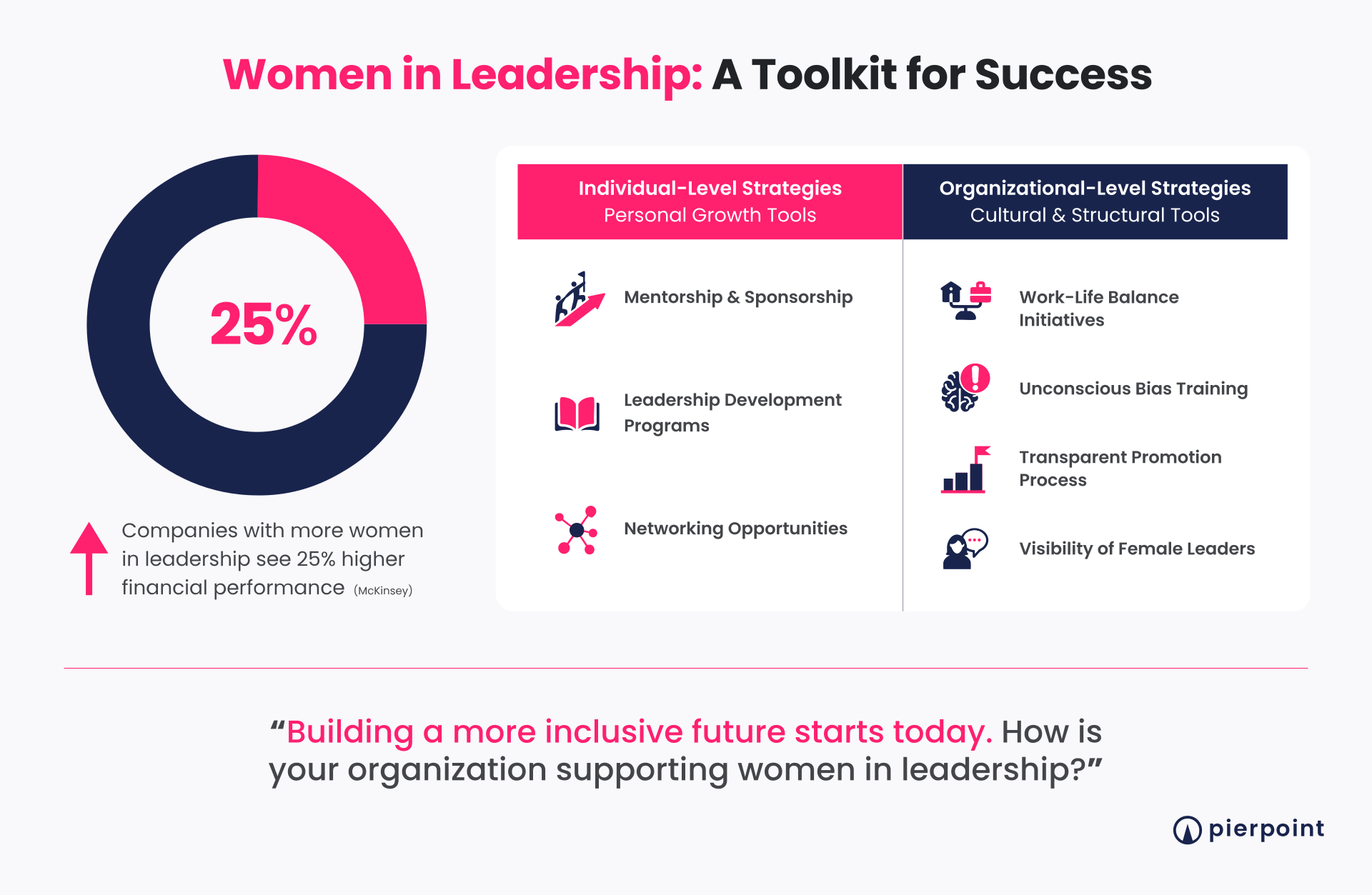
That’s why you should invest in:
Address Roadblocks for Women at the Organizational Level
An organization’s culture plays a significant role in shaping the success of the career trajectory. By creating an environment that values different perspectives, innovation, and respect, organizations can create a workplace where everyone can succeed.
Organizational changes you can make to support female talent include:
Creating Lasting Impact with Your Leaders
Supporting women in leadership roles is not just about fairness—it is about shaping a future where talent and leadership are recognized based on merit. Now is the time to take action. By fostering mentorship, and investing in leadership development organizations can break barriers and empower the next generation of women leaders.
If you’re looking for support with leadership development or executive search services, Pierpoint International can help. Book a call today.

Valeria Stupenengo is the Director of Talent Operations at Pierpoint International, with over 17 years of expertise in the RPO industry. She has successfully led multi-functional teams across the U.S., Latin America, and India, delivering tailored recruitment solutions to clients across diverse sectors and contributing to more than 15,000 global hires. Valeria has also overseen operations with an annual P&L of up to $10 million, driving process innovation through the implementation of AI and predictive analytics.
With a Bachelor’s in Social Communication from the University of Buenos Aires and an Executive Program from the Lubar School of Business, Wisconsin, Valeria combines academic knowledge with extensive international experience. Fluent in Spanish and English, with proficiency in Portuguese, she has led large-scale projects in Mexico, Costa Rica, Brazil, and Colombia.
A strong advocate for ESG principles, Valeria is dedicated to promoting diversity and inclusion in hiring and helping organizations align with sustainability goals. Her leadership style is both strategic and empathetic, as she balances her rewarding career with her role as a mother.
Explore More Talent Acquisition Insights

The War of Life Sciences Talent and How to Win It
The life sciences industry is facing a significant talent shortage. Discover 5 strategies to hire and retain top talent.

The Essential Remote Onboarding Checklist
Get our essential remote onboarding checklist to help your business overcome the challenges related to hiring a remote workforce.

5 Ways To Make Your Interview Process More Inclusive
See how you can make your interview process fairer and more inclusive and get tips on writing more inclusive interview questions.