
For human resources, 2025 has been a year of transformation. This year reminded us just how complex the people side of business has become. From economic uncertainty to the rapid adoption of AI, HR leaders have had to navigate challenges that tested resilience and strategy alike. But here’s the good news: out of every challenge came valuable lessons for HR leaders. My HR advice for next year focuses on leading people through uncertainty while keeping humanity at the center of business decisions.
This is my 2025 in review, and I’ll share what we’ve learned, which HR trends matter most, and how leaders can prepare for the next wave of change.
2025 in Review: The HR Trends That Changed Everything
If you felt like 2025 was one curveball after another, you’re not alone. It was a year of volatility in the main forces that shape HR strategies:
HR Trends 2025:
What We’ve Learned from This Year’s HR Trends
When it comes to HR advice, you really have to look back to chart your way forward. The HR trends that will shape next year are firmly grounded in this year’s trends.
Talent Mobility Is More Important Than Ever
Because of economic uncertainty, policy changes and skills shortages, HR couldn’t rely on external recruitment to fill skills gaps. According to a McKinsey report, 87% of executives say they are already facing or expect to face skill gaps and it’s HR’s job to find a way around it.
The right HR advice here is simple: invest in internal talent. Mobilize the people you have before you look outside. This will allow you to reduce hiring costs and improve retention by showing employees a clear career path.
Talent Strategies for the Human-Machine Era
If 2024 was the year of AI adoption, 2025 has been the year of integration. But with complexity comes confusion. HR teams are trying to integrate as many AI tools as possible to:
- 1Analyze employee sentiment
- 2Personalize the employee or candidate experience
- 3Predict employee churn
- 4Automate onboarding workflows
- 5Improve employee development and training
- 6Provide real-time performance management and feedback
But all these tools are generating data, so much data that it’s difficult to piece it all together to see the big picture.
HR needs to align its tools and data to move beyond understanding “what happened” to producing “what should we do next” insights.
Which leads me to my next point, keeping the workforce future ready. The skills needed for work are expected to change by 70% by 2030. And that means staying on top of the skills you have now with a mind to your future needs too. Not easy with a skills gap and reduced hiring budgets.
My advice for HR professionals: lean into workforce planning that accounts for both automation and human development. Use now-next strategies: address immediate gaps, invest in retaining the talent you have, but also upskill so you have the skills you’ll need in the future.
Shrinking Budgets Are Creating Pressure
Economic pressure is forcing HR leaders to do more with less. But cutting budgets doesn’t mean sacrificing people. Instead, it’s about smart allocation.
We’re seeing rising burnout in managers who have smaller teams and longer lists of responsibilities. Strategically using automation can remove repetitive administrative burdens, improving productivity and performance. But this is also a delicate balance. You need to ensure your workforce is comfortable using AI tools in their workflows, monitor accuracy, and remain compliant without increasing administrative burdens.
Talent Experience Is Everything
The latest HR trends 2025 confirm what we’ve long known: culture drives retention.
According to Gallup, a strong company culture makes employees:
And yet, only 30% of employees feel engaged at work in 2025. That means we need to do something.
Too many companies have fallen into what I call “culture apathy”; believing that once you’ve defined values, the work is done. The truth is, your employee experience is the sum of every interaction. The best HR advice I can give is to audit and improve benefits, wellness initiatives, and communication practices.
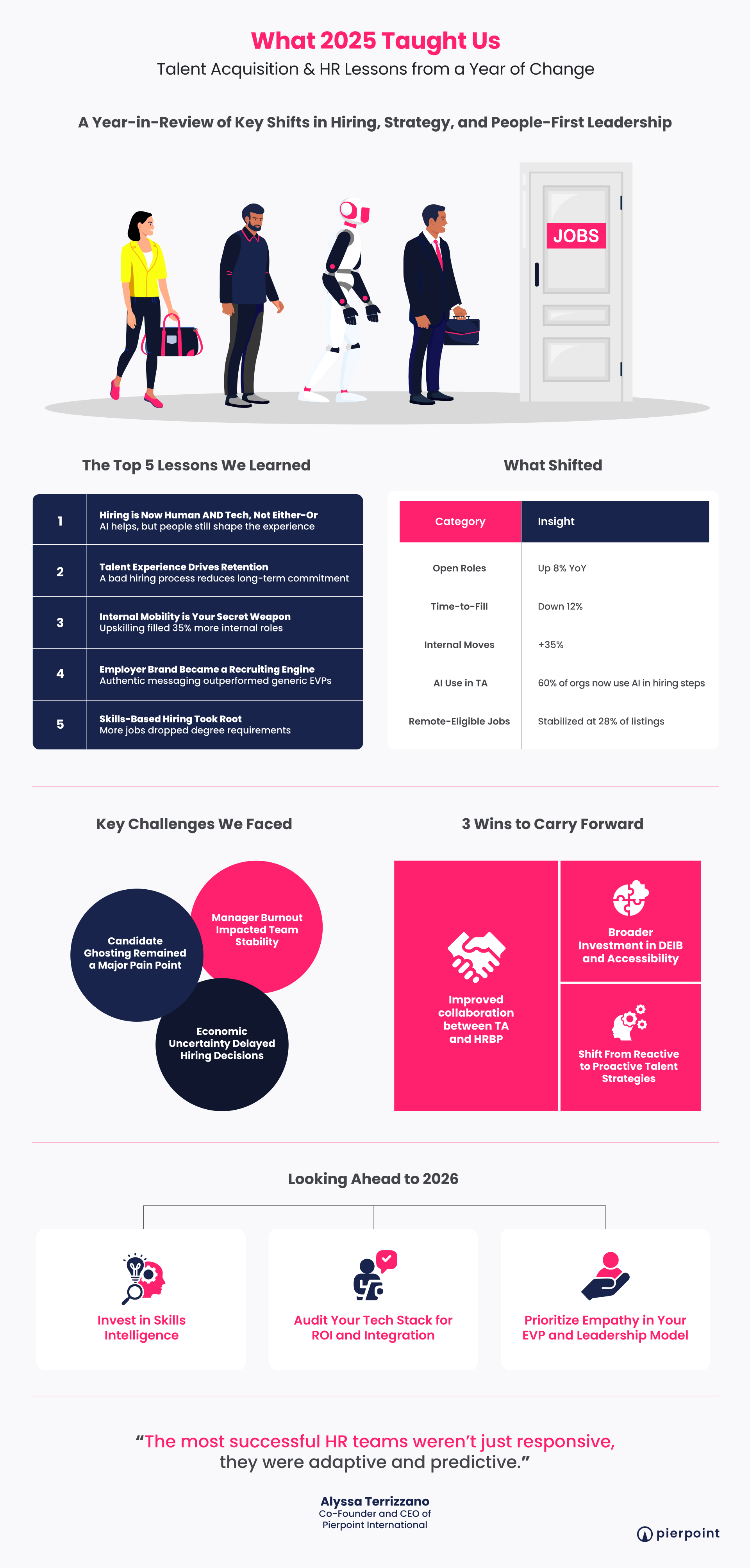
Turning HR Advice Into Action:
The big takeaway for me is that HR leaders must balance agility with humanity. Technology, economics, and policy shifts will continue to change the rules. But what doesn’t change is the central role HR plays in shaping how people experience work.
As I reflect on emerging trends in HR, my perspective as a CEO and an HR leader is clear: this is a defining moment for our profession. We can either let external forces dictate the future of work, or we can lead with vision, empathy, and strategy.

Alyssa Terrizzano is the Co-Founder and CEO of Pierpoint International, where she leads the company’s growth and business strategy. With extensive experience in talent acquisition and human resources, Alyssa has a strong background in recruitment and managing teams in the medical tech, biotech, and high-tech industries.
Alyssa's focus on creating collaborative work environments and supporting team development helped establish her as a recognized leader in the HR and Recruitment Process Outsourcing (RPO) sectors. Alyssa holds a Bachelor of Science in Human Resources and an MBA, and values teamwork in addressing challenges.
Explore More Talent Acquisition Insights

Redefine How You Build Your Workforce
Explore recruiting and candidate sourcing approaches that help employers reach job seekers and plan future workforce needs.

Top 4 Strategies to Reduce Your Time-To-Fill
Explore these top 4 strategies to reduce your time-to-fill and learn how to implement them in your organization.

Employee Benefits Trends To Watch in 2026
What are the top employee benefits trends shaping 2026? Get details about how organizations can attract and retain top talent.