
Talent shortages, hiring freezes, and an ever-changing skills landscape are forcing organizations to rethink how they grow. When you can’t hire your way out of a talent gap, you have to develop your way through it. That’s where unlocking hidden skills comes in. Every organization has untapped capabilities that are overlooked because they don’t fit neatly into job descriptions. The secret to staying competitive isn’t just recruiting new talent. Skill development programs can help you find and elevate the potential already sitting in your company.
Essentially, this article explores how to find those hidden skills. We’ll explore why they matter, and how skill development (done the right way) can transform your workforce from within.
What Are Hidden Skills and Why Are They Important?
“Hidden skills” are those skills that aren’t explicitly in your employees’ job descriptions. They weren’t specifically hired for them. But, they’re the untapped strengths.
For example:
Why are these hidden skills so important? Because in times of labor-market pressure, you can’t rely solely on external hires. The U.S. Chamber of Commerce reports there are only 71 workers for every 100 jobs in the U.S. That’s a pretty big skills shortage.
Additionally, 87% of companies know they either already have a skills gap or will have one within a few years, according to McKinsey. So developing the skills you might already have is a great way to ensure you have the skills you need to remain competitive.
In my opinion, you can approach hidden skill development two ways:
- 1
Company-Wide Upskilling Initiatives: Broad programs to improve workforce capabilities.
- 2
Personalized Learning and Development that Taps Into Hidden Skills: Targeted efforts to identify and elevate under-recognized strengths.
Ultimately, blending both gets you the most impact. The organization moves together, and individuals feel seen and valued.
Skills Your Workforce May Have
Let’s look at the kinds of hidden skills your people may already hold. You’re looking for transferable skills that can move across roles, functions, and even industries. They could be technical skills or soft skills.
Introducing: Skill Development
So how do we find and nurture these hidden skills? The answer is simple: skill development.
We’re talking about the deliberate, ongoing process of identifying, building, refining, and applying capabilities so people perform better today and are prepared for tomorrow.
In the context of tapping hidden skills, it isn’t just about formal training. It’s about designing experiences, encouraging stretch assignments, mentoring, and supporting people in ways that reveal and amplify what they already bring.
What Is Skill Development?
From my vantage point, skill development is like building a muscle: you don’t just flex it once. You train, strengthen, rest, refine, and repeat.
According to industry definitions, skill development means:
In the trenches of talent acquisition, I’ve seen how personalizing this process makes it stick.
When employees say, “I had no idea I was good at X until someone asked me,” you’ve just uncovered a hidden skill and created a moment of transformation.
Skill Development Examples:
To stay ahead, you need cutting-edge skill development approaches. Essentially, these are the methods that go beyond the old classroom slide-deck and check-the-box training.
Consider these examples of skill development:
However, the most successful companies are those who blend formal learning with real-world exposure. That’s the kind of support that says: “We believe in you and your growth.”
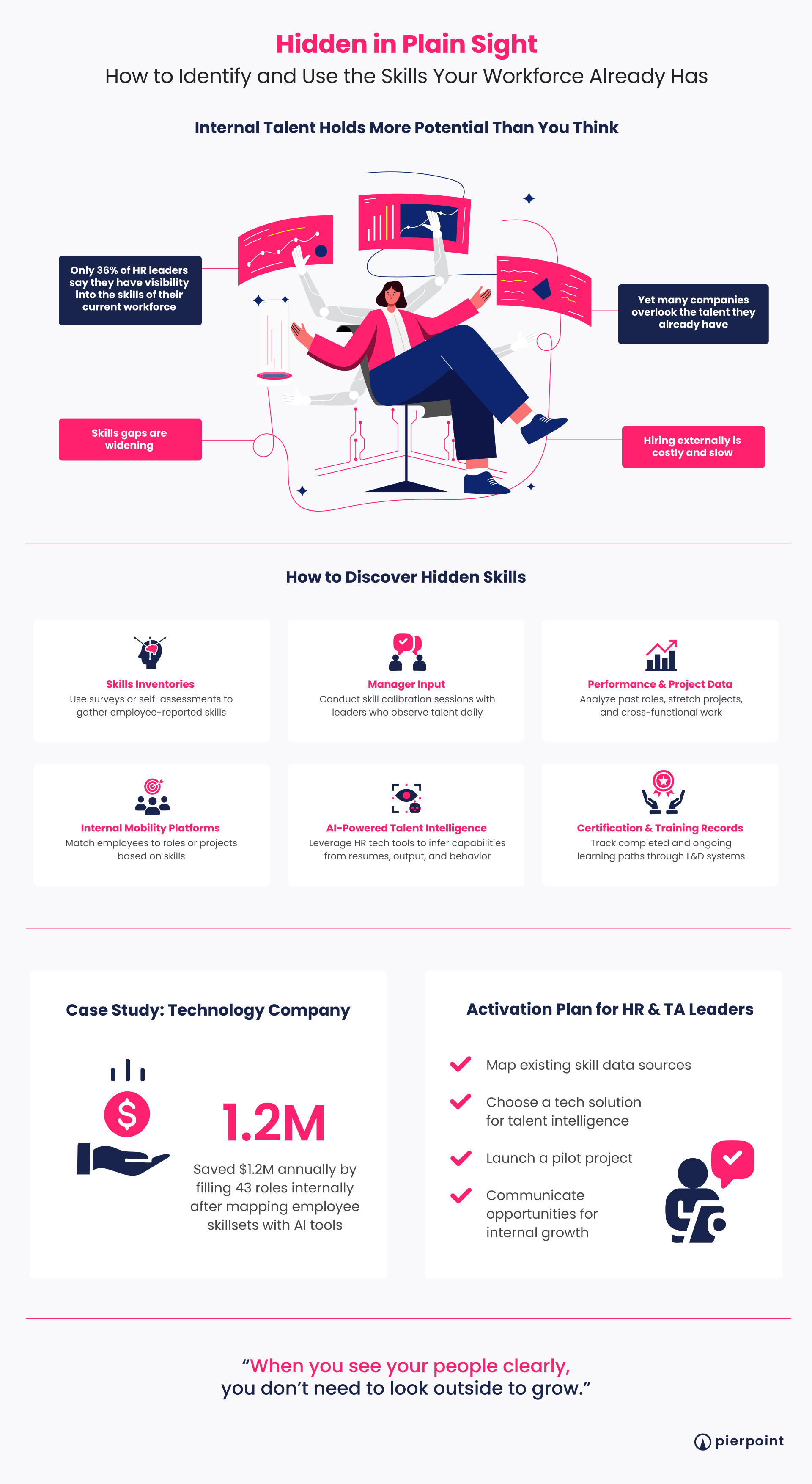
You Already Have the Skills, You Just Need to Uncover Them
Finally, ask your workforce, “What do you enjoy doing most when no one’s watching?” “What skill have you always wanted to try but never had the chance?” Your answers could uncover hidden skills that turn into competitive advantage.
When you invest in employee skill development, when you lift latent potential, you create relationships that last 5+ years, 10+ years. And you build a workforce that isn’t just doing jobs, but doing them brilliantly.
Make your workforce your greatest asset. Develop those skills, harness potential, and stay ahead.

Tracey Langford brings over 20 years of expertise in talent acquisition, with a focus on building long-term relationships and delivering strategic workforce solutions. Based in Georgia and a UCLA graduate, she creates tailored recruitment solutions that align with organizational goals.
As the Director of Global Talent Solutions at Pierpoint International, Tracey specializes in full and partial RPO, recruiting on demand, and executive search, drawing on her experience in consultative problem-solving, solutions architecture, and sales enablement. Her leadership in shaping innovative talent strategies has made her a trusted voice in the field.
Outside of work, Tracey enjoys tennis, pickleball, and spending time with her family, including her husband, two daughters, and their dog, Sandy Girl.
Explore More Talent Acquisition Insights

How to Communicate Your Company Values During the Hiring Experience
See how communicating core company values in the hiring phase will save time and money by identifying the candidates who fit best.

Making Your Diversity, Equity & Inclusion Goals A Reality
Discover how an RPO provider like Pierpoint can help make your organization’s diversity and inclusion goals a reality.

Why Your RPO Needs to Practice Diverse and Inclusive Hiring
RPO partners need to focus on inclusive hiring strategies. Learn how these can help your organization create a diverse workforce.